
It’s PR, Not the ER. Don’t Burn Out Your Best Guys.
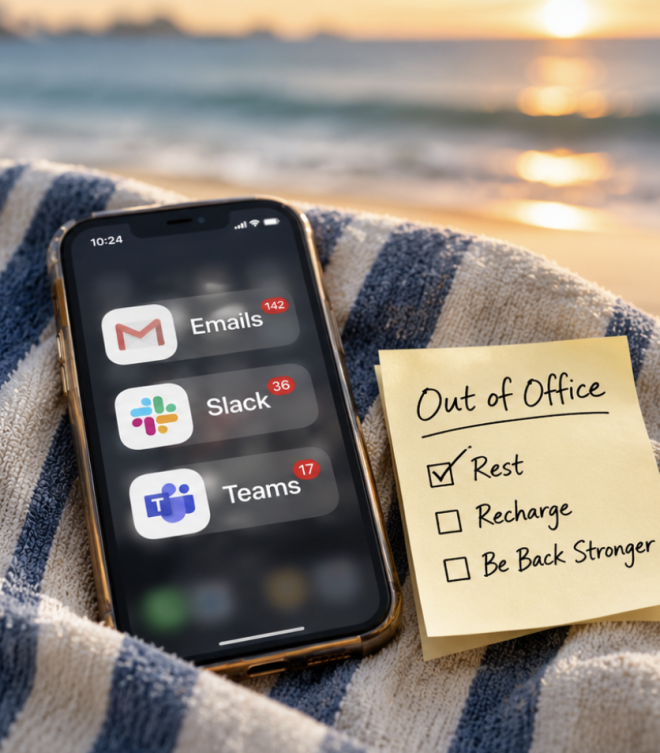
Face facts: Nobody’s going to die if a press release goes out late. And yet we so often treat PR like the ER, with late nights, long weekends of the wrong kind, and a phone living in our hand.
At any given time, according to one study, one in three physicians is experiencing burnout. Is that what we want for our teams? Because that’s what we’re going to get as long as we let urgency dominate our culture instead of being an occasional part of the job.
Two recent episodes of Cracking the Comms Code tackled this issue from different angles. One focused on building healthy agency cultures and featured
- Tiffany Guarnaccia, Founder & CEO of Kite Hill;
- Dave Dziok, Managing Director of Narrative Strategies; and
- Evan Boyer, Founder & CEO of Leaders PR.
The other explored why account executives are a firm’s most important salespeople, featuring
- Hinda Mitchell, Founder & President of Inspire;
- Kevin Santo, Associate Vice President at Water & Wall; and
- Jake Ciccarelli, Senior Account Executive at FINN Partners.
There’s Culture, and Then There’s Culture
Agency leaders often spend enormous energy defining company values. This is good, but you can’t expect your employees to spend their whole career with their noses in your glossy company handbook. They’re going to notice that iPhone dangling from your ear, and they’ll catch on when you’re Slacking them from your cabana on Oahu instead of enjoying your family vacation.
If you’re routinely sending out weekend emails, then you’re telling people that work never really stops. If you’re firing out notifications while your account executive is out of the office, then he’s going to internalize that unplugging is never truly acceptable. And if you yourself never take any time off, you may have a good reason for that, but remember that you’re teaching your employees something.
This principle works both ways. Leaders who build recovery into the calendar after demanding periods, encourage employees to disconnect, and distinguish between important work and urgent work create organizations where people can perform at a consistently high level instead of surviving one crisis after another.
Your Best Salespeople Aren’t in Sales
Agency owners often think they’re the firm’s chief salesperson, and they’re right — but only in part. That’s because the people most responsible for long-term revenue are account executives.
These are the professionals clients interact with every day. They answer difficult questions, manage expectations, communicate bad news, spot opportunities for additional work, and build the trust that turns one-year engagements into decade-long relationships.
Leaders have to care about new business, but new business can’t become an obsession. Existing business — that is, business lovingly nurtured by your dedicated, not-burnt-out account executives — pays the bills while you chase the next client.
If agencies want sustainable growth, they need to spend as much time developing account executives as they do developing new business strategies.
How is that development accomplished? Start with trust, and be intentional about it. Junior employees shouldn’t spend client meetings silently taking notes while senior leaders do all the talking. They should arrive with assigned speaking roles, opportunities to demonstrate expertise, and managers prepared to support them if something goes sideways.
The relationship between comms leaders and their account executives must center on teaching and coaching. Leaders can ask their AEs to do work that’s just beyond their current comfort level — and remain available to guide them, offer gentle correction where it’s needed, and stand behind them while they figure it out.
Blind Guides Make Bad Teammates
All of these patterns of good leadership behavior come more naturally with a stiff shot of transparency. Employees should understand how the business works: client profitability, revenue trends, retention, business development, and time tracking. This goes for the whole team, not just account executives.
(A quick side note on time tracking: we think hourly billing should die in PR, but that doesn’t mean you shouldn’t understand how your team members spend their time. Several guests said knowing where time goes helps junior staffers and leaders alike identify over-serviced accounts, prevent burnout, improve staffing decisions, and estimate future work more accurately.)
When your team understands the business, you now have a starring line-up of staffers who will make better business decisions. They’re elevated from drones or workhorses to allies and collaborators. They’ll start enjoying their work more as they take ownership of it, and they’ll know that their boss values them. A good company culture can follow from that more effectively than when it’s handed down from above.
The “Apple a Day” for Comms
Communications is doomed to be stressful. Demanding clients, unpredictable news cycles, and occasional late nights are only a few of the ailments you’ll find in this triage hall.
But if you treat it like a triage hall — particularly a bad one, with doctors and nurses panicking and dropping scalpels all over the place — then you can look forward to exhausted, disinvested account executives who fail to keep your clients happy because they can’t even take a breath.
To nail it down, agencies that consistently retain clients aren’t necessarily the ones that respond fastest to every email. They’re the ones whose people communicate clearly, solve problems confidently, and build relationships clients trust.
It’s PR, not the ER. The best agencies know the difference.
Watch the featured episodes of Cracking the Comms Code below:
